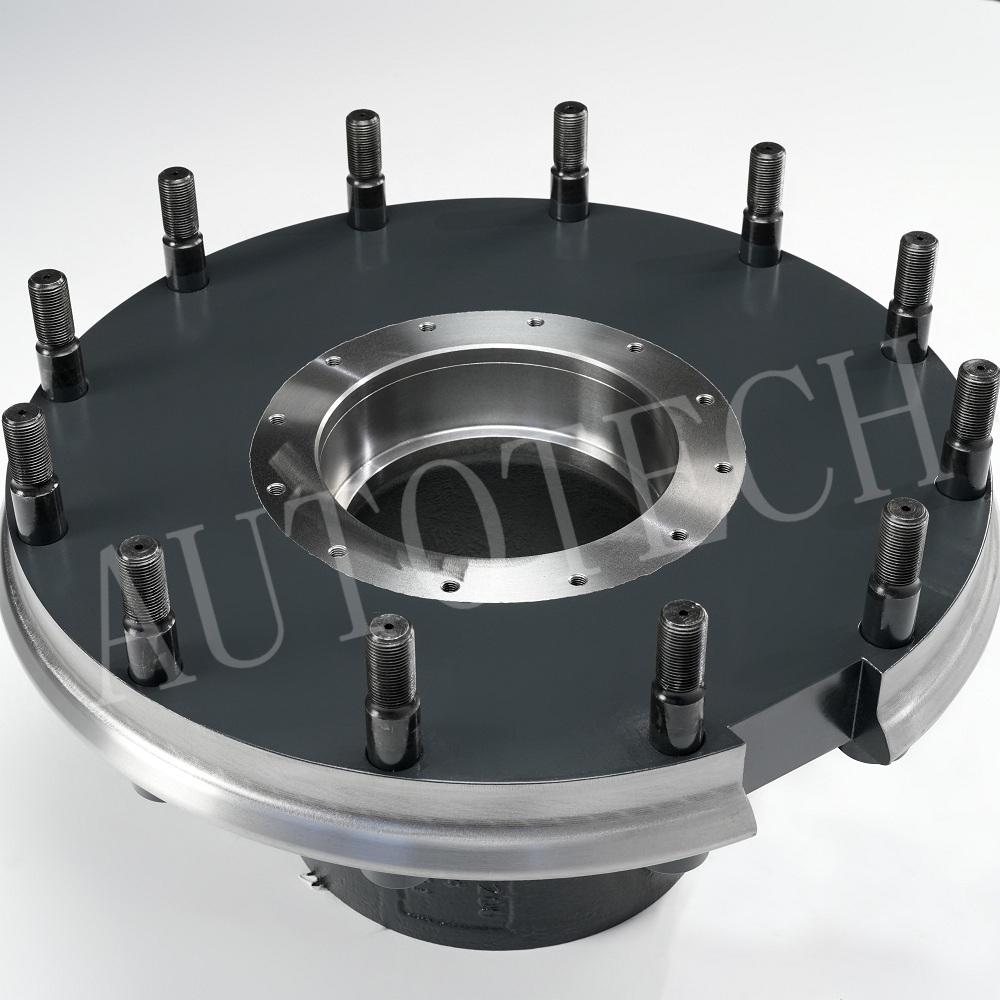
Recently, driven by the continuous expansion of downstream industries including high-end equipment manufacturing, new energy vehicles, construction machinery and aerospace, the full industrial chain of casting, forging and precision machining has ushered in a new round of technological innovation and capacity upgrading. Leading manufacturers in the industry have continuously optimized the whole-process production system, and deeply integrated five core manufacturing processes: Steel Investment Casting, Ductile Iron Sand Casting, Aluminum Casting, Forging and Machining. Supported by professional Process Design systems, enterprises have built a closed-loop covering research and development, production, machining and quality inspection. This effectively solves long-standing industry pain points such as insufficient precision, high energy consumption and low yield rate in traditional manufacturing, promoting the comprehensive transformation of domestic casting and forging industry from extensive mass production to high-end customized and intelligent precision manufacturing.
Accurate Layout of Segmented Processes to Meet Diverse Demands for High-End Components
Downstream manufacturing sectors are increasingly demanding components featuring lightweight design, high strength, strong corrosion resistance and superior precision. A single manufacturing process can no longer satisfy diversified order requirements, making a full-process integrated matrix the core competitiveness of manufacturing enterprises. Major manufacturers have refined process application scenarios according to material characteristics and working conditions of different components to realize accurate matching between processes and products:
- Steel Investment Casting: Featuring near-net shape forming advantages, this process is specialized in producing high-precision stainless steel components with complex inner cavities. It is widely applied in fluid valves, medical device parts, aerospace metal fittings and corrosion-resistant components for chemical engineering. Requiring minimal subsequent cutting work, it achieves a dimensional precision of ±0.05mm and superior surface finish compared with conventional sand casting, perfectly catering to small-batch and high-precision customized demands of high-end equipment.
- Ductile Iron Sand Casting: As a core process for heavy-load components, it balances high strength, excellent toughness and cost-effective mass production. It is mainly adopted for manufacturing construction machinery housings, chassis parts, machine tool bases and wind power transmission castings. By optimizing sand mold proportioning and spheroidization treatment processes, manufacturers greatly improve the impact resistance and fatigue strength of castings, making this process an irreplaceable fundamental manufacturing technology in heavy industry.
- Aluminum Casting: Keeping pace with the lightweight trend of new energy vehicles and rail transit, this process focuses on aluminum alloy die casting and gravity die casting for motor housings, automotive heat dissipation parts and lightweight structural components for rail transit. Benefiting from aluminum alloy’s low density, excellent thermal conductivity and good formability, it helps reduce overall equipment weight and energy consumption, becoming the fastest-growing segmented track in the casting industry.
- Forging: Designed for critical load-bearing components requiring ultra-high strength, forging eliminates internal grain defects of metal materials through pressure forming and improves metal density and overall mechanical properties. It is widely used for producing gears, transmission shafts, high-pressure valve bodies, wind power main shafts and other core stressed components. Compared with casting products, forged parts have better fatigue resistance and structural stability, serving as a critical guarantee for the safe operation of high-end equipment.
Empowered by Integrated Machining to Improve Final Product Quality
Casting and forging blanks commonly suffer from dimensional deviation, surface burrs and unqualified geometric tolerances. As an essential downstream link of the industrial chain, Machining covers core procedures including finish machining, dimensional calibration, surface treatment and thread processing. Currently, the industry has widely adopted five-axis linkage machining centers, CNC lathes and automatic polishing production lines to realize one-stop finish machining for casting and forging blanks. Instead of merely supplying semi-finished blanks, enterprises provide integrated finished product delivery solutions combining casting/forging forming and precision machining. This directly meets end customers’ assembly requirements, cuts secondary processing costs for clients and improves overall collaborative efficiency of the industrial chain.
Process Design as the Core Engine to Drive Cost Reduction, Efficiency Improvement and Green Production
Process Design acts as the core backbone supporting the five aforementioned manufacturing processes.
Traditional casting and forging industry is plagued by fixed process schemes, redundant production procedures and high reject rates. Modern intelligent manufacturing adopts digital process simulation systems to conduct full-process simulation before formal production: optimizing gating systems for steel investment casting to reduce molten steel loss; adjusting cooling parameters for ductile iron sand casting to avoid shrinkage cavities and porosity defects; optimizing forging stroke parameters to cut equipment energy consumption; and planning reasonable machining allowances to eliminate material waste.
Supported by proactive and digital Process Design, enterprises can predict potential production risks in advance. The overall product yield rate has been lifted from 88% to over 96%, while production energy consumption has been reduced by around 15%. This development complies with China’s dual-carbon goals and green upgrading guidelines for the casting industry, achieving triple improvements in product quality, production efficiency and environmental performance.
Industry Outlook: Full Process Integration for Integrated Intelligent Manufacturing Solutions
Industry experts point out that future competition in the casting and forging industry will no longer focus on single processes or individual products. Instead, it will center on enterprises’ capability to integrate Steel Investment Casting, Ductile Iron Sand Casting, Aluminum Casting, Forging and Machining under the guidance of professional Process Design. With the in-depth advancement of Industry 4.0, emerging technologies such as digital twin, AI process optimization and 3D printing mold manufacturing will be further integrated into the whole production workflow. Manufacturers will transform from simple component suppliers to one-stop metal forming solution providers.
In the next stage, the domestic casting and forging industry will continue to bridge high-end process gaps and strengthen independent Process Design capabilities. Leveraging the complete full-process system, the industry will break technical monopolies of high-precision key components held by overseas manufacturers, provide more reliable, precise and cost-effective metal components for strategic industries including new energy, high-end construction machinery and aerospace, and enhance the independence and controllability of China’s high-end equipment industrial chain.