In 2026, China's casting, forging and precision machining industry has entered a critical period of structural upgrading. Driven by the continuous expansion of downstream high-end equipment industries including new energy vehicles, construction machinery, marine engineering and general machinery, the market has put forward stringent requirements on the strength, precision, lightweight performance and overall service life of metal parts. Leading domestic manufacturers are accelerating the integration of full-category forming processes. Enabled by digitalProcess Design, they have realized integrated production covering Steel Investment Casting, Ductile Iron Sand Casting, Aluminum Casting and Forging, supported by one-stop Machining services. Such integrated intelligent manufacturing solutions for metal parts have facilitated the comprehensive transformation of China's casting and forging industry from low-end overcapacity competition to a high-end track featuring high precision, high added value and low carbon emission.
Unique Advantages of Each Process to Meet Diversified Demands for Downstream Parts
As downstream equipment manufacturing scenarios become increasingly segmented, different metal forming processes satisfy differentiated working condition requirements of components with their respective technical strengths, forming a mutually complementary and coordinated industrial ecosystem.
Steel Investment Casting serves as a core high-precision forming process. Characterized by near-net shaping, high dimensional accuracy, excellent surface finish and great capability for manufacturing complex special-shaped components, it is the preferred production process for hydraulic components, valve fluid parts, rail transit precision connectors and customized non-standard military parts. Compared with traditional sand casting of steel, steel investment casting effectively eliminates internal defects such as porosity and shrinkage cavity, ensuring stable operation of parts under extreme working conditions including high pressure, strong corrosion and alternating high and low temperatures. Supported by robust market demand, high-end orders for this segment have increased by more than 11% year-on-year, making it one of the fastest-growing subdivisions in the precision casting sector.
Steel Investment Casting serves as a core high-precision forming process. Characterized by near-net shaping, high dimensional accuracy, excellent surface finish and great capability for manufacturing complex special-shaped components, it is the preferred production process for hydraulic components, valve fluid parts, rail transit precision connectors and customized non-standard military parts. Compared with traditional sand casting of steel, steel investment casting effectively eliminates internal defects such as porosity and shrinkage cavity, ensuring stable operation of parts under extreme working conditions including high pressure, strong corrosion and alternating high and low temperatures. Supported by robust market demand, high-end orders for this segment have increased by more than 11% year-on-year, making it one of the fastest-growing subdivisions in the precision casting sector.
Ductile Iron Sand Casting balances competitive production cost with outstanding toughness, impact resistance and wear resistance, which makes it perfectly suitable for large-size heavy-load components such as construction machinery housings, machine tool bases, engine crankcase and municipal pipeline fittings. To address long-standing industrial pain points of high energy consumption and high rejection rate in traditional sand casting, domestic manufacturers have introduced intelligent sand molding systems and automatic pouring temperature control equipment. The optimization has cut the rejection rate of ductile iron castings by over 18%, enabling this process to maintain a stable market share in rigid-demand markets including infrastructure equipment and traditional industrial machinery.
Boosted by the global lightweight manufacturing trend, Aluminum Casting has witnessed explosive market growth. Featuring low density, excellent thermal conductivity and superior moldability, aluminum alloy parts perfectly match the demand for three-electricity system housings, vehicle structural parts, heat dissipation components for new energy energy storage equipment and lightweight robotic accessories. Multiple aluminum casting technologies including high-pressure die casting, low-pressure casting and gravity die casting are widely applied currently. Aluminum alloy castings are gradually replacing partial steel components, becoming a core driving force for the lightweight transformation of the whole manufacturing industry.
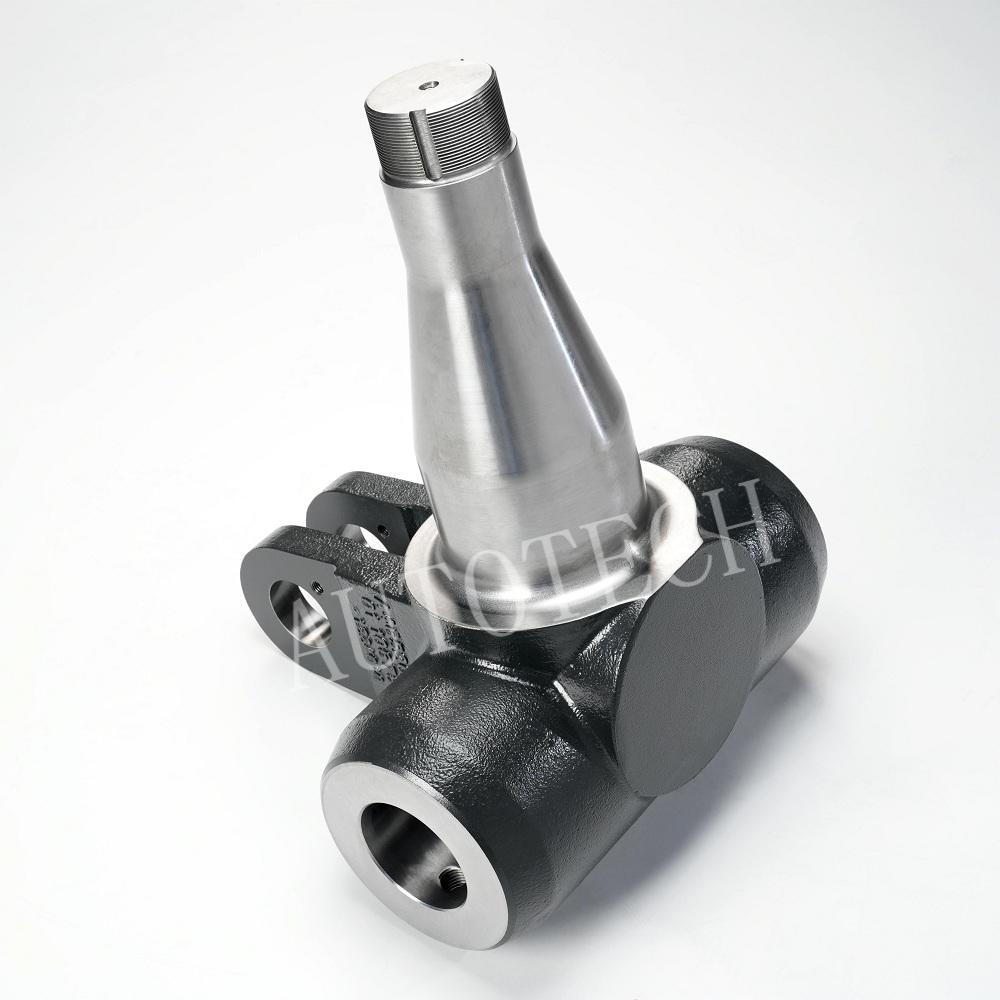
Forging is irreplaceable for manufacturing core load-bearing components requiring ultra-high strength and fatigue resistance. The forging process refines internal metal grains and eliminates internal material pores through mechanical pressure, greatly improving the overall mechanical properties of metal workpieces. It is widely adopted for automotive transmission shafts, wind power main shafts, construction machinery pin shafts, high-pressure flanges and other key transmission and load-bearing parts. The popularization of advanced precision forging technologies such as warm forging has further reduced the machining allowance of forgings, cutting raw material consumption and subsequent processing costs effectively.
Digitalized Front-end Process Design Solves Core Production Bottlenecks
The industry has long been plagued by disjointed production processes: low dimensional precision of casting and forging blanks leads to heavy processing load, excessive material consumption and long new product trial cycles in the subsequent Machining procedure. Nowadays, digitalized front-end Process Design has become a core solution to improve overall production efficiency and reduce manufacturing costs across the industrial chain.
Manufacturers adopt professional simulation software for front-end process verification before formal mass production, covering gating system simulation for casting, stress analysis for forging and tool path simulation for machining. Potential production risks including casting shrinkage defects, forging cracks and machining interference can be identified and solved in advance. Process engineers optimize production parameters targeting common defects such as insufficient filling in thin-walled steel investment castings, unstable graphite spheroidization in ductile iron sand castings, air holes in aluminum castings and stress concentration in forgings. The optimization cuts trial production times from 3-5 times to only 1-2 times, shortening the overall production cycle by 50%. In addition, integrated process design realizes seamless connection between blank forming and follow-up finishing, with unified dimensional tolerance standards.
All kinds of casting and forging blanks can be directly processed via high-end CNC finishing and five-axis linkage Machining equipment, delivering full-chain services covering drawing design, blank forming, precision processing and finished product inspection.
Integrated Full-chain Manufacturing Becomes a Mainstream Industrial Development Trend
Industrial research data shows that the overall market size of China's casting and forging parts industry has exceeded 380 billion RMB in 2026. The competitiveness of single-process OEM manufacturing continues to decline. Enterprises equipped with full-process layout of Steel Investment Casting, Ductile Iron Sand Casting, Aluminum Casting and Forging, independent in-house Machining capacity and professional Process Design team enjoy over 30% higher order premium than single-process manufacturers.
Meanwhile, national carbon peaking and carbon neutrality goals force the whole industry to pursue green upgrading. Major manufacturers are upgrading energy-saving melting equipment, promoting recycled metal material utilization and building dust-free sand casting production lines, to lower overall energy consumption and pollutant emissions while guaranteeing qualified mechanical performance and dimensional precision of finished products.
Industry Outlook
Industry experts point out that future competition in the metal parts manufacturing industry will no longer focus on single forming technology, but comprehensive full-chain manufacturing capability centered on Process Design, supported by coordinated multi casting and forging processes and matched precision Machining services. With continuous iteration of downstream high-end equipment manufacturing, market demand for high-precision steel investment castings, high-toughness ductile iron sand castings, lightweight aluminum castings, high-strength forgings and one-stop precision machining services will keep rising.
Domestic manufacturers need to continuously invest in process research and development and improve high-end precision manufacturing capabilities, so as to consolidate core competitiveness in the global supply chain and support the independent and high-quality development of China's high-end equipment manufacturing industry.