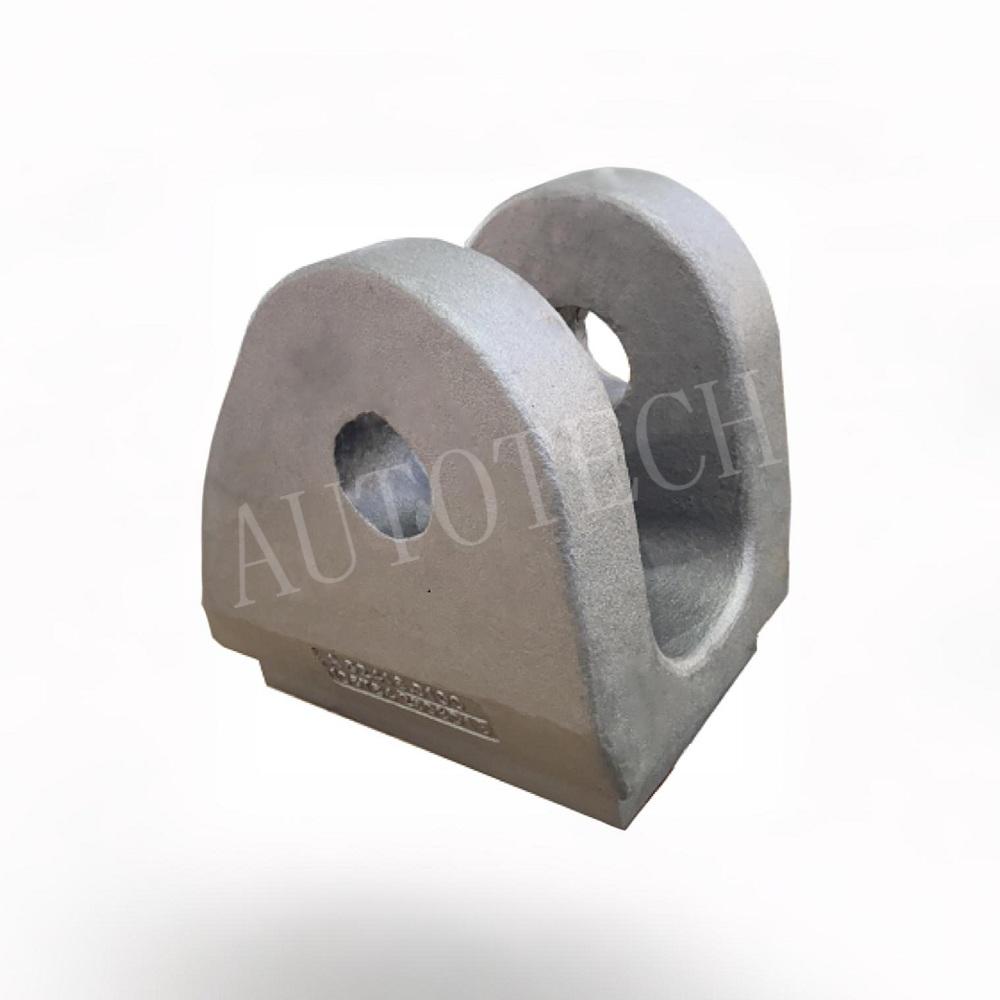
Against the backdrop of global manufacturing accelerating toward high efficiency, precision, and sustainability, experts at the recently concluded 15th International Summit on Casting & Forging Technologies pointed out that a single process can no longer meet the complex performance requirements of critical components. The deep integration of Steel Investment Casting, Ductile Iron Sand Casting, Machining, Aluminum Casting, Forging, and Process Design has become the key to breaking through technical bottlenecks.
According to industry reports, driven by demand from the new energy vehicle and aerospace sectors, Aluminum Casting has achieved a compound annual growth rate of 7.2% owing to its lightweight and high thermal conductivity advantages. Meanwhile, Steel Investment Casting continues to gain penetration in high-temperature alloy components due to its near-net shape capability and ability to form complex thin-walled structures. At the same time, Ductile Iron Sand Casting is regaining favor among design engineers in wind power and heavy machinery applications due to its excellent fatigue resistance and cost effectiveness.
"Stand-alone casting or Forging often results in anisotropic mechanical properties. However, through scientific Process Design, the high dimensional accuracy of Steel Investment Casting can be combined with the dense grain flow of Forging, supplemented by Machining to achieve micron-level tolerances on critical mating surfaces," said Dr. Li Zhenguo, chairman of the summit's technical committee. "For example, in the production of commercial vehicle steering knuckles, we first use Ductile Iron Sand Casting to obtain complex internal cavities, then apply localized Forging to strengthen critical load-bearing areas, and finally perform five-axis Machining to machine the mounting reference surfaces. This type of cross-process synergy relies entirely on upfront Process Design."
Moreover, digital simulation technology is reshaping traditional workflows. With AI-assisted Process Design, manufacturers can simultaneously optimize wax pattern shrinkage in Steel Investment Casting, fill velocity in Aluminum Casting, and grain flow direction in Forging, thereby reducing trial-and-error costs. Multiple leading suppliers have announced the establishment of integrated "casting + forging + machining" production lines, enabling 48-hour rapid delivery from blank to finished part.
Industry analysts suggest that over the next five years, manufacturing companies that possess multi-process integration capabilities and make Process Design a core competency will build a solid moat between high-end customization and mass production. Steel Investment Casting and Ductile Iron Sand Casting, as primary shape-forming processes, will form a complementary matrix with Forging and Aluminum Casting, and with the ultimate empowerment of Machining, will redefine the performance boundaries of industrial components.