With the continuous industrial upgrading of aerospace, high-end equipment, new energy, engineering machinery and other fields in recent years, the metal forming and precision machining industry has entered a new stage of high-quality development. Enterprises in the industry have continuously deepened full-process manufacturing technologies, integrating the core capabilities of Process Design, diversified metal casting, forging forming and precision Machining. Relying on a diversified process system to manufacture high-performance metal parts, they drive the comprehensive breakthrough of domestic precision manufacturing towards high precision, high strength, lightweight and green development, effectively filling the supply and demand gap in the high-end parts market.
In the core casting process sector, the industry has formed a collaborative production pattern featuring multiple materials and diverse processes to meet the stringent application requirements of various scenarios. Among them, Steel Investment Casting boasts the advantages of high dimensional accuracy, excellent surface finish and strong adaptability to complex part structures, making it a core process for high-end precision parts. It can produce various steel castings such as stainless steel, carbon steel and alloy steel, which are widely applied in high-end scenarios including aerospace accessories, hydraulic components and precision valve bodies. This process greatly reduces the subsequent machining allowance and improves material utilization and product consistency.
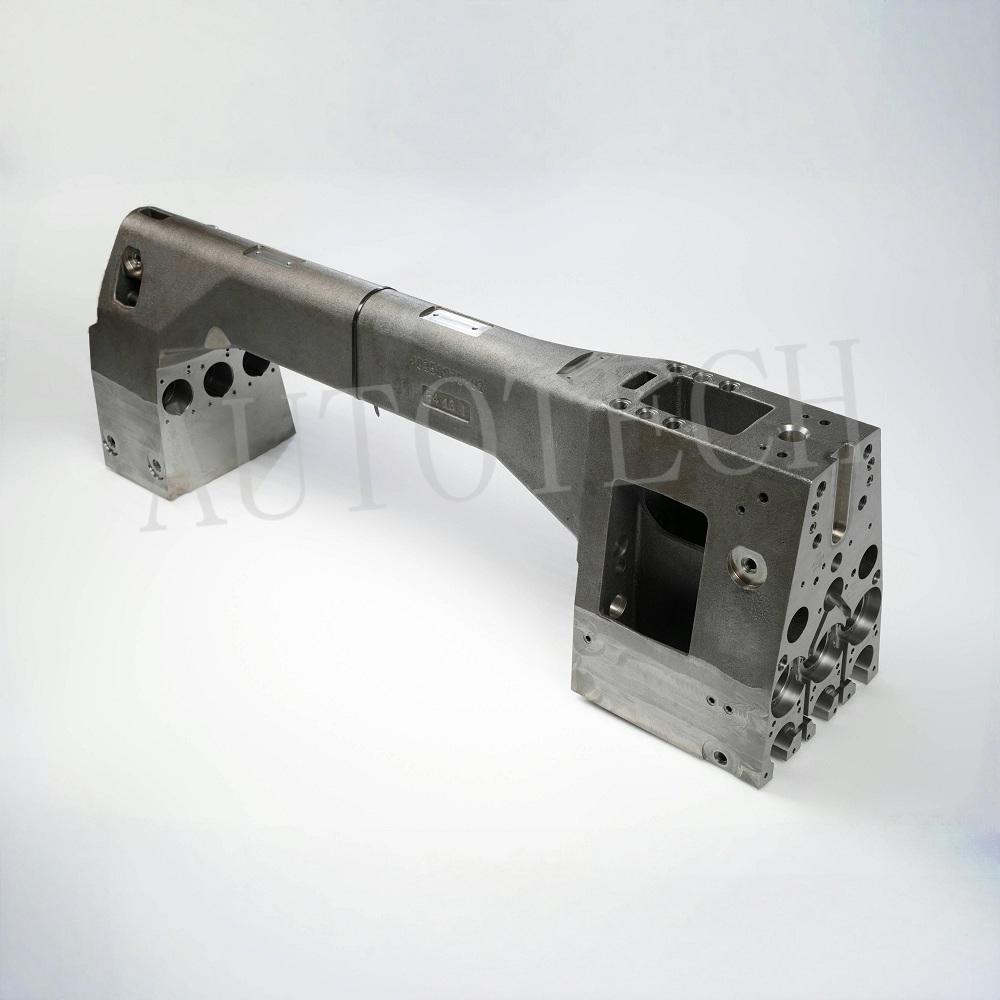
Ductile Iron Sand Casting plays an irreplaceable role in heavy-load, wear-resistant and high-strength industrial scenarios. Adopting mature sand molding technology and professional spheroidization treatment technology, the process produces ductile iron castings with excellent toughness, impact resistance, wear resistance and low deformation coefficient. These castings are suitable for heavy-duty equipment such as large mechanical frames, engine housings, rail transit accessories and heavy industry transmission parts. With high cost performance and stable mass production performance, this process continues to underpin the industrial basic parts market.
In response to the industry trend of equipment lightweighting and energy conservation, the technological iteration of Aluminum Casting has been accelerating. Featuring light weight, superior thermal conductivity, good corrosion resistance and excellent formability, aluminum alloy castings have become the preferred solution for lightweight parts of new energy vehicles, intelligent equipment, communication devices and hydraulic systems. By optimizing the process parameters of die casting and low-pressure casting, industry enterprises have solved common industry pain points such as porosity, deformation and insufficient strength of aluminum castings, greatly improving the adaptability and service life of lightweight parts and conforming to the green and low-carbon development needs of high-end equipment.
Apart from casting forming technologies, Forging, as a core metal strengthening and forming process, forms complementary advantages with casting technologies. Pressure forging refines the internal metal structure of parts, effectively enhancing their strength, toughness and fatigue resistance. It can meet the strict performance requirements of key load-bearing components for high-end machinery, wind power equipment and aerospace applications, ensuring stable operation of products under high-pressure, high-temperature and heavy-load working conditions and consolidating the quality foundation of high-end parts.
A complete high-end manufacturing system relies on the forward empowerment of professional Process Design and the refined post-processing of precision Machining. Leading enterprises in the industry have realized customized forward process design, which optimizes the full-process solutions for casting, forging and forming based on product application scenarios, material characteristics and structural parameters, so as to avoid forming defects, improve production efficiency and reduce energy consumption and loss. Meanwhile, integrated precision machining technologies including CNC turning, milling, grinding and precision boring are adopted for secondary finishing of cast and forged blanks, strictly controlling the dimensional accuracy, flatness and assembly adaptability of products and realizing high-quality whole-process management from blank forming to finished product delivery.
Industry insiders stated that the precision metal manufacturing industry has abandoned the single-process production mode and gradually built a full industrial chain production system featuring customized process design, diversified forming technologies and refined machining. In the future, the industry will continue to focus on technological innovation, deepen the integrated application of core processes including steel investment casting, ductile iron sand casting, aluminum casting and forging, and continuously optimize processing technologies and production procedures. It will provide solid component support for the localization, high-end development and lightweight upgrading of the high-end equipment manufacturing industry, helping China’s precision casting industry rank among the global high-end manufacturing sectors.