
In today's global manufacturing landscape, which continuously pursues precision, strength, and efficiency, a manufacturing system integrating multiple advanced forming and processing technologies is becoming a key engine driving the upgrading of the high-end component industry. Steel Investment Casting, Ductile Iron Sand Casting, Aluminum Casting, Forging, along with closely supporting Machining and Process Design, are reshaping the manufacturing value chain from concept to product through deep integration and innovative application.
Emphasis on Both Precision and Strength: Forming Processes Each Show Their Strengths
In the field of metal forming, these four processes meet different material and performance requirements:
Steel Investment Casting continues to provide high-quality steel components with excellent dimensional accuracy, complex surface forming capabilities, smooth surfaces, and near-net shape for aerospace, medical implants, high-end valves, and other fields.
Ductile Iron Sand Casting, with its good economy and flexibility, combined with the excellent strength and toughness of ductile iron, remains a reliable choice for large heavy equipment, automotive chassis parts, and infrastructure components.
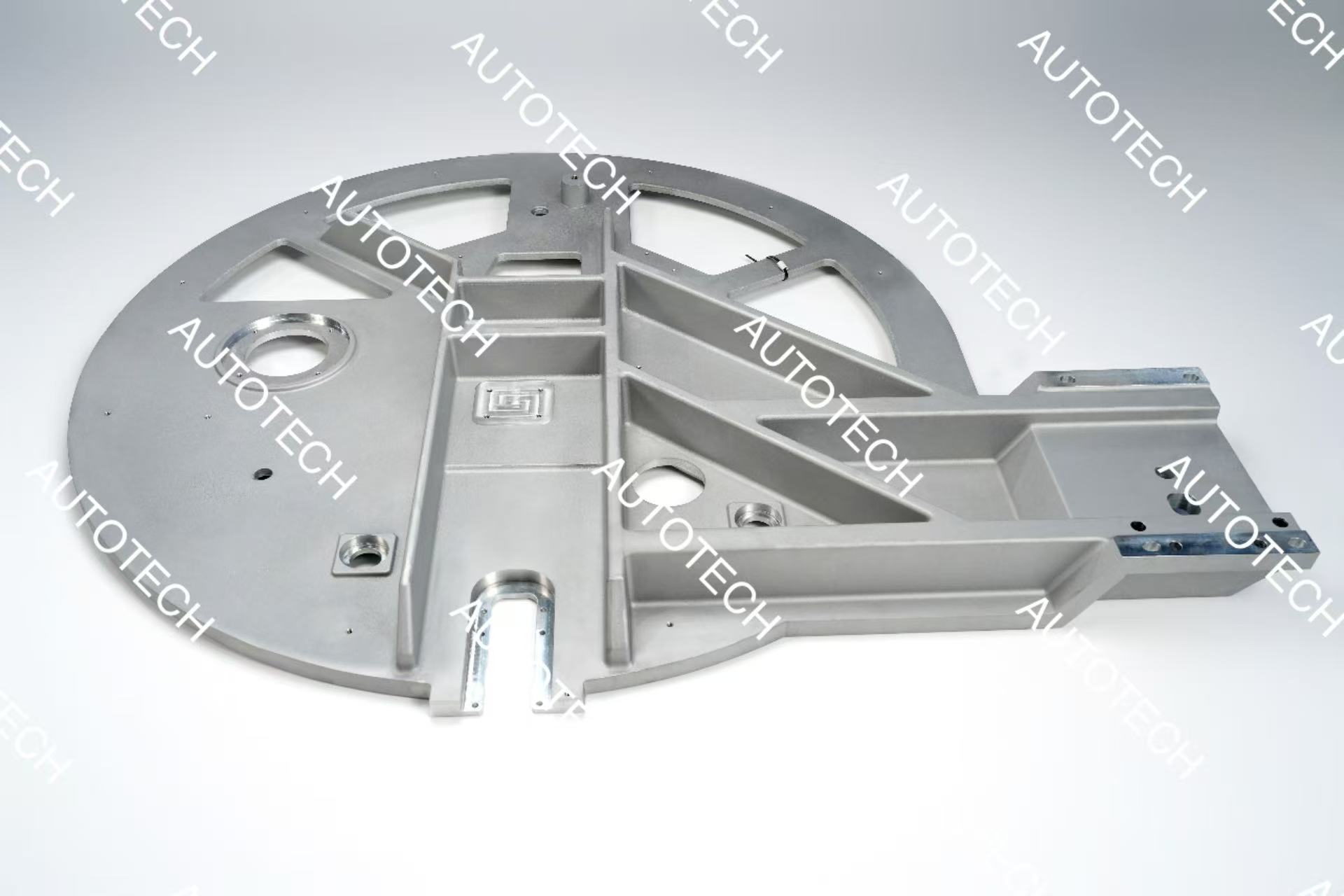
Aluminum Casting holds a prominent position under the lightweight trend, particularly die-casting processes, widely used in automotive structural parts, electronic product housings, and other scenarios requiring weight reduction while maintaining good strength.
Forging subjects metal to high temperature and pressure, resulting in continuous grain flow lines, granting components unparalleled strength and fatigue resistance. It is the preferred process for critical parts enduring extreme loads, such as engine crankshafts, key aerospace structural components, and heavy-duty connecting parts.
Post-Processing and Front-End Design: Key Links to Maximize Value
Forming is only the first step. Subsequent finishing and forward-looking design planning determine the final performance and cost competitiveness of the product.
Machining, as a key value-adding step, utilizes high-precision equipment like CNC machine tools to perform turning, milling, drilling, and grinding on cast or forged blanks. This ensures parts meet strict dimensional tolerances, geometric tolerances, and assembly requirements, serving as the decisive step in achieving functional integration of components.
Process Design is the "brain" of the entire manufacturing workflow. Excellent process design begins in the early stages of product development. It comprehensively considers material properties, performance requirements, cost constraints, and production volume to scientifically select and optimize the aforementioned manufacturing pathways, realizing the transformation from drawings to efficient, stable, and economical production solutions. It ensures the advantages of each process are maximized, reduces trial and error, and shortens delivery cycles.
Future Outlook: Integration and Intelligence Drive the Future
Currently, industry-leading companies are committed to breaking down process barriers and promoting "Forming-Machining-Design" integrated services. By front-loading and integrating Process Design throughout, deeply combining Forging, various Casting capabilities, and precision Machining, they provide customers with full-chain solutions from blank to finished product. Simultaneously, digital simulation, smart factories, and sustainable manufacturing concepts are continuously permeating each specific process, driving the overall manufacturing level towards higher efficiency, greater precision, and greener development.
It is foreseeable that the collaborative evolution and deep integration of these six core processes will continue to provide solid technological and product support for strategic industries such as high-end equipment manufacturing, new energy vehicles, clean energy, and robotics, leading global precision manufacturing to new heights.
Emphasis on Both Precision and Strength: Forming Processes Each Show Their Strengths
In the field of metal forming, these four processes meet different material and performance requirements:
Steel Investment Casting continues to provide high-quality steel components with excellent dimensional accuracy, complex surface forming capabilities, smooth surfaces, and near-net shape for aerospace, medical implants, high-end valves, and other fields.
Ductile Iron Sand Casting, with its good economy and flexibility, combined with the excellent strength and toughness of ductile iron, remains a reliable choice for large heavy equipment, automotive chassis parts, and infrastructure components.
Aluminum Casting holds a prominent position under the lightweight trend, particularly die-casting processes, widely used in automotive structural parts, electronic product housings, and other scenarios requiring weight reduction while maintaining good strength.
Forging subjects metal to high temperature and pressure, resulting in continuous grain flow lines, granting components unparalleled strength and fatigue resistance. It is the preferred process for critical parts enduring extreme loads, such as engine crankshafts, key aerospace structural components, and heavy-duty connecting parts.
Post-Processing and Front-End Design: Key Links to Maximize Value
Forming is only the first step. Subsequent finishing and forward-looking design planning determine the final performance and cost competitiveness of the product.
Machining, as a key value-adding step, utilizes high-precision equipment like CNC machine tools to perform turning, milling, drilling, and grinding on cast or forged blanks. This ensures parts meet strict dimensional tolerances, geometric tolerances, and assembly requirements, serving as the decisive step in achieving functional integration of components.
Process Design is the "brain" of the entire manufacturing workflow. Excellent process design begins in the early stages of product development. It comprehensively considers material properties, performance requirements, cost constraints, and production volume to scientifically select and optimize the aforementioned manufacturing pathways, realizing the transformation from drawings to efficient, stable, and economical production solutions. It ensures the advantages of each process are maximized, reduces trial and error, and shortens delivery cycles.
Future Outlook: Integration and Intelligence Drive the Future
Currently, industry-leading companies are committed to breaking down process barriers and promoting "Forming-Machining-Design" integrated services. By front-loading and integrating Process Design throughout, deeply combining Forging, various Casting capabilities, and precision Machining, they provide customers with full-chain solutions from blank to finished product. Simultaneously, digital simulation, smart factories, and sustainable manufacturing concepts are continuously permeating each specific process, driving the overall manufacturing level towards higher efficiency, greater precision, and greener development.
It is foreseeable that the collaborative evolution and deep integration of these six core processes will continue to provide solid technological and product support for strategic industries such as high-end equipment manufacturing, new energy vehicles, clean energy, and robotics, leading global precision manufacturing to new heights.